(Note: I submitted the following statement to DNR on August 19th, during the initial window for public comment on the proposed land transfer.)
Dear Sir/Ma’am,
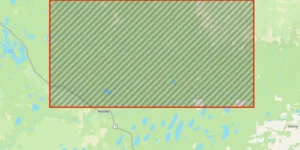
I am writing to formally object to the preliminary decision of DMLW to convey approximately 19,950 acres of State-owned land in the Matanuska-Susitna Borough to the Alaska Industrial Development and Export Authority (AIDEA). I am confident that the current administration believes the conveyance to be in its interest, but a conveyance being in the interest of an administration that will be replaced less than four months from now (December 1st) is a very different thing from a conveyance being legally in the public interest. Based on the limited information available to the public at the present time, this conveyance does not appear to be in the public interest. I welcome additional information from either the current administration or the incoming administration that would show that this project is in fact in the public interest.
The statutory authority for this conveyance, AS 38.05.035(e) and AS 38.05.810, requires that it be for public or charitable use. This conveyance does not appear to fit either category. It is not for charitable use and it appears to be substantially for private rather than for public use. Lip-service given to uncertain potential for job creation, which may not even result in the employment of Alaska residents, does not establish public use or demonstrate that the conveyance is in the public interest.
A statewide vote on the use of particular land is far greater evidence of what is in fact in the public interest. The land at issue was subject to such a vote. In 1974, Alaskans voted to move the capital to the road system. In 1976, Alaskans voted to make Willow the location on the road system and land was set aside for that purpose. To date, this area is the only location that Alaskans have voted to make their capital. The current conveyance gives zero consideration to the will of the people expressed twice at the ballot box in a statewide election.
The proposed conveyance is to the Alaska Industrial Development and Export Authority (AIDEA). As a member of the House Judiciary and House State Affairs Committees in the legislature, I heard testimony from countless Alaskans who personally experienced what AIDEA considers public process. The testimony reflected case after case where AIDEA deliberately sought to avoid and stymie transparency requirements written to ensure the public has a meaningful opportunity to participate in decisions being made on behalf of the public by their own government through AIDEA. The picture that emerged was one of an organization which has pursued autonomy from the public over many years. The current iteration of AIDEA rebuffs accountability from the public and the public’s elected representatives in the legislature. This lack of transparency encourages sweetheart deals, the details of which do not become public until years after decisions are made. AIDEA has been in charge of numerous projects over the years which have squandered public land and money and made some people rich while being of dubious benefit to the public at large. This land should not be conveyed to an organization with such a tarnished reputation.
AIDEA was originally created in 1967 simply to borrow money at low interest rates for industrial development. AIDEA was initially barred from pursuing a project that did not first obtain the approval of local government. The City of Houston has made it clear that it does not support the current proposed conveyance. That alone should stop this proposed conveyance in its tracks. Local government was to originally hold seats on the AIDEA board. That is no longer the case. Over the years, AIDEA has come to be referred to as a major investment bank that skirts federal laws by relying on (largely non-existent) state regulation.
The legislature has shown a preference in statute for projects that are substantive and established rather than aspirational. It does not appear that the proposed use for this land meets that goal (as of yet). When you are dealing with an organization that has a history of violating public transparency requirements by denying reasonable requests or charging excessive fees to those requesting public information, it can be very difficult for members of the public to ascertain what is actually taking place. Based on the information currently available, I do not see a plan that is compelling to most members of the public. It might become compelling over time or with more information, but it has not yet reached that important benchmark.
The conveyance will significantly impact water quality, on hunting, on fishing and other recreational uses. What the public will be giving up does not appear to be outweighed by what the public (or rather private interests) will be gaining through the conveyance. We are told that access to energy will not be positively impacted, as that is one of the reasons that AIDEA currently exists, but it is difficult to see how that will happen. It is just as likely, if not more so, that public access to energy will be negatively impacted through this conveyance. If that were to happen that would certainly not be in the public interest.
I also do not see an adequate plan to mitigate the impact this conveyance and subsequent settlement of this land will have on bird and animal habitat, particularly the migratory birds which are the subject of current federal law or treaties currently in force according to the Department of State (https://www.state.gov/wp-
For each of these reasons and because the current plan that has been made available to the public is also a really bad idea, this conveyance order should be formally rescinded and a compelling plan written that will garner public trust and public support from the many Alaskans who will be impacted by a conveyance of such a large swath of public land in southcentral Alaska.
Sincerely,
David Eastman
Wasilla, Alaska
(907) 355-4759
Please sign our petition opposing the transfer: Sign Here.
The land transfer is also opposed by:
The Alaska Outdoor Council
(Read Their Letter of Opposition)
The Alaska Snowmachine Alliance
(Read Their Letter of Opposition)
The Meadow Lakes Community Council
(Read Their Letter of Opposition)
The Alaska Outdoor Access Alliance
(Read Their Letter of Opposition)
…and many other Alaskans!