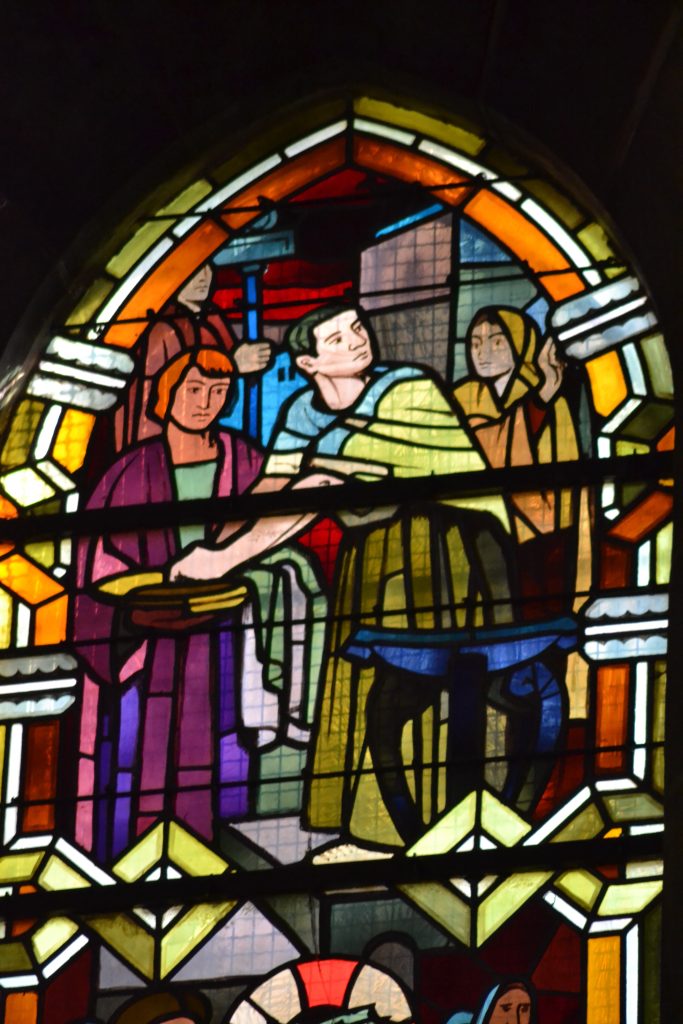

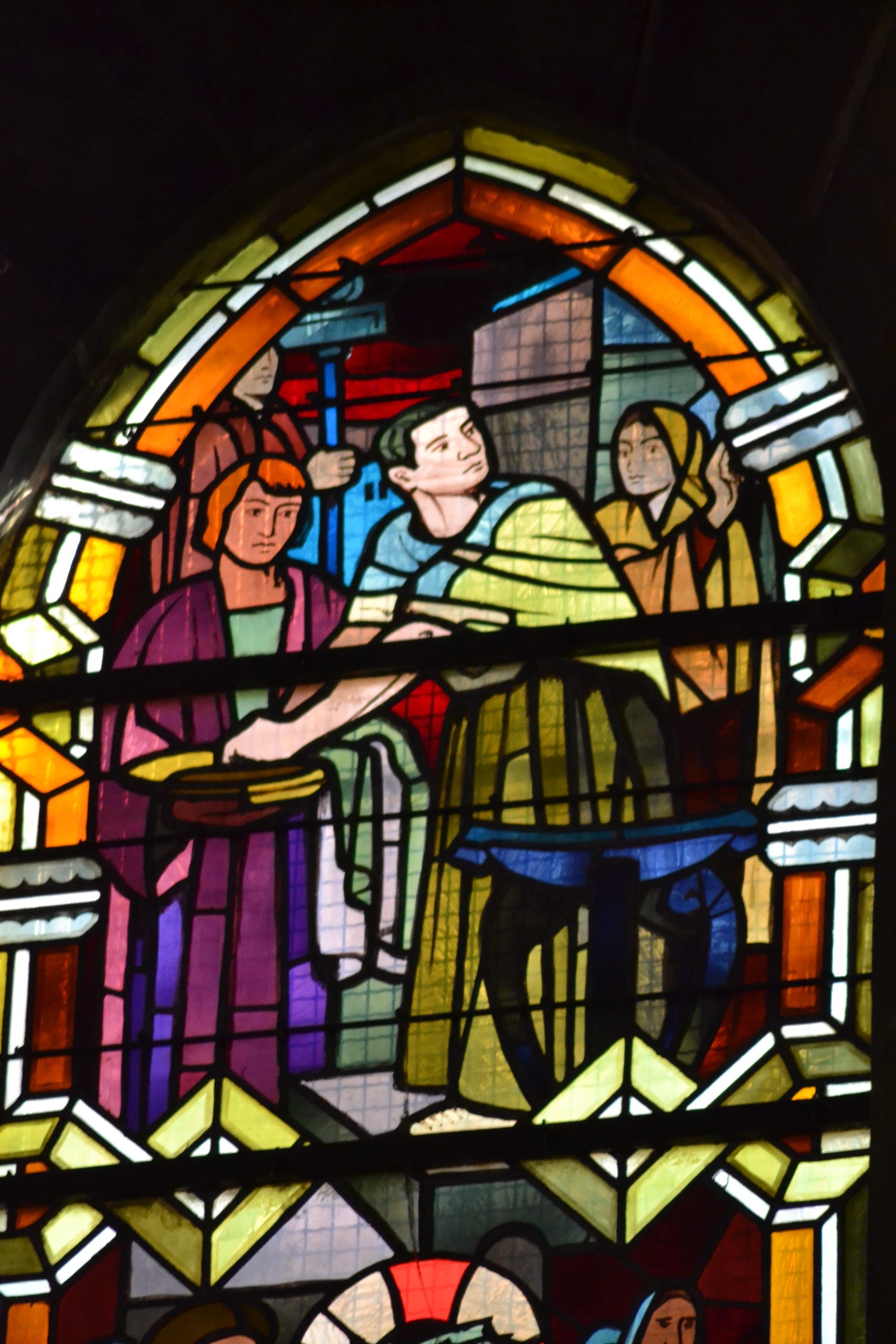
(Roman Governor Pontius Pilate Condemns Jesus to Death by Dorothée QUENNESSON from Pixabay)
An innocent man was condemned to death. It was outrageous.
Season Six of The Chosen premieres on Amazon Prime next Sunday, November 15th. I had the chance to watch an early release of Episode 1 in Wasilla last week.
Episode 1 tells the story of the arrest of Jesus in the garden and his first midnight trial before the Sanhedrin. The episode centers on the political expediency of the nighttime arrest and the midnight trial. It was improper for the Jewish temple guard to leave Jerusalem and arrest someone outside the city even in daytime, much less at night. It was forbidden under Jewish law to carry out a capital trial at night. It was forbidden for a capital trial to be completed in less than two days time, and for the defense to not be allowed to bring forward witnesses.
Episode 1 highlights these improprieties and the driving force behind them, political expediency.
The Jewish political and religious leaders had a problem. They feared that they would lose their power. Secondly, they feared that the Jewish state would lose what limited political autonomy it enjoyed as a vassal state of the Roman Empire. They took both concerns to the high priest, who cynically declared “…it is better for you that one man should die for the people, not that the whole nation should perish.”
It was a matter of national security (to politicians, holding on to power often is). Their problem was created by one man. If Jesus continued to preach and teach and perform miracles they feared their nation would lose its autonomy and they would lose their political power. For the sake of preserving the political status quo (ever the divine state of affairs for politicians currently in power), Jesus needed to go away, and quickly. They were decided on that, but Jesus had left Jerusalem and they did not know where He was.
The national celebration of Passover was set to begin on Friday at dusk. The political establishment was adamant that Jesus not be killed during Passover, fearing it would inspire a revolt. If only they could find out where He was before Passover started. Judas, for reasons of his own, provided them the information they sought. Judas stepped forward and kissed Jesus in the darkness of the garden on Thursday night. He and those with him could not afford to wait until morning. Yes, the kiss, the arrest, the trial, and the crucifixion were inappropriate, but they were expedient.
It was politically expedient for the Sanhedrin to sentence Jesus to death, lest they lose their place in the Jewish religious and political order of their day.
It was politically expedient for Pontius Pilate to ratify the death sentence, lest he lose his place in the Roman political order of his day.
If Judas was acting on impulses as a zealot, it was politically expedient for him to hand Jesus over to the Sanhedrin, lest he lose his place in the political order to come.
Jesus’ guilt was not the principal issue. To some, it was entirely irrelevant. Political expediency demanded that He be killed whether He was innocent or not. It flowed logically from the simple proposition that the political and religious leaders of Jesus’ day deserved their place, and that it would be wrong for them to lose that place.
This simple proposition makes outsized demands on the political leadership of each generation. It would not, I think, be inappropriate to say that it makes a claim of divinity. After all, that is the nature of anything that claims preeminence in a person’s life. The claim of the Sanhedrin was that the survival of the nation must trump everything else, and perhaps that the nation could hardly be said to have survived, if “their place” did not survive with it. The demand is that everything else must give way, even when it results in violence, even when it results in human sacrifice.
When viewed as a false god seeking our worship, we can more easily see this claim on our devotion for what it truly is. In 30 AD, that false god demanded a human sacrifice in exchange for temporarily preserving the political status quo in Judea. The price for Pilate and the Sanhedrin was condemning an innocent man to die. Jesus was the threat. His actions brought about the tempest. He must be the one thrown overboard.
The demands of political expediency in our own day are often no more reasonable than they were in 30 AD. We satisfy its most outrageous demands to our lasting shame. Now, in our present political system we are somewhat insulated from that shame by the fact that such decisions are often made by our elected representatives. Rarely, is the question put to us directly “Which one do you want me to release to you, Barabbas, or Jesus?”
Our elected lawmakers, like those present at the midnight trial of Jesus, are not nearly so removed. We rarely hear of what happened to Pilate or to the Sanhedrin after the crucifixion, but the story of what happened to Judas after the trial is captured twice in the Biblical account. It did not turn out like he expected. He returned the money he had been given and took his own life.
A select few in the political establishment, namely Saul and Nicodemus, “lost their place” rather than submit to expediency. A larger number made their peace with its demands.
How many political leaders in our own day possess the moral courage to do the right thing even when it will greatly endanger their reelection? The answer is very few. A far greater number have come to view their place in the political order as sacrosanct. Wisdom has come to mean doing whatever is required to maintain that place.
The Sanhedrin came to see themselves as “too big to fail” and willingly chose the cross as their political salvation.
That is essentially the risk that anyone in politics faces, and to which many have succumbed. It is not that they choose to make the Son of Man a literal human sacrifice a second time, but that they become so wedded to the necessity of their own place in the political and religious order that they would sooner sacrifice an innocent man than lose their place.
Consider the heroic example of Saul and Nicodemus when Jesus declares: “For whosoever will save his life shall lose it: and whosoever will lose his life for my sake shall find it.”
In the world of politics such men are incredibly rare. The nature of politics itself rarely attracts them. Most who are attracted to politics come seeking a place and are willing to sacrifice a great deal to keep it once they find it. These are very likely some of the “rich” men (politicians and religious leaders in our modern vernacular) that Jesus is referring to when He explains “it is easier for a camel to go through the eye of a needle than for a rich person to enter the kingdom of God.”
Fortunately, Jesus does stop there: “With man this is impossible, but with God all things are possible…everyone who has left houses or brothers or sisters or father or mother or children or lands, for my name’s sake, will receive a hundredfold and will inherit eternal life. But many who are first will be last, and the last first.”